
Check whether a review can be challenged · SRA-regulated conveyancing teams in England and Wales
Someone on the other side of a conveyancing transaction reviewed our firm. Can we challenge it?
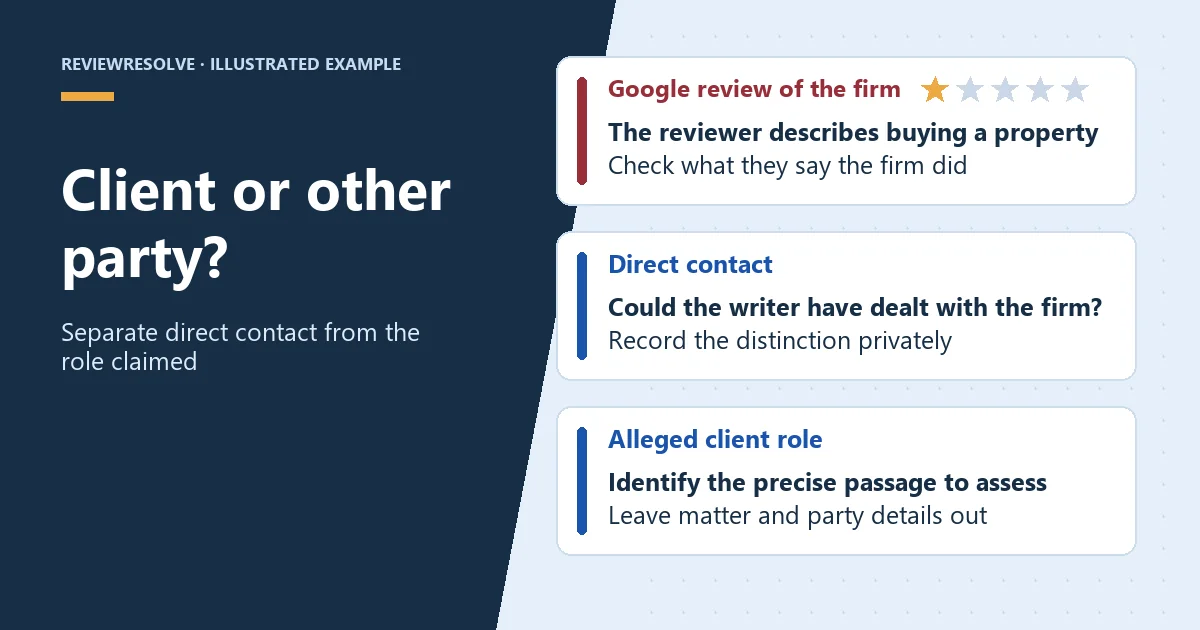
Read the review as a description of what happened, then check what role the author claims. A buyer or seller may have interacted with the other side’s firm even if they never instructed it. A review that claims the firm acted for the writer can raise a separate question if the context supports a specific misrepresentation.
Classify the statements one at a time
Start with the public review link, the exact wording and the branch profile on which it appears. Ask the team whether the author is describing direct contact, repeating what an intermediary said, or claiming to have instructed the firm. A search that finds no instruction under the display name leaves open a phone call, an email or contact with another member of the team.
| What the post says | Question for the firm | What may follow |
|---|---|---|
| The firm never returned my call. | Did the writer try to reach the team directly? | Treat plausible contact as feedback about communication. |
| I instructed and paid this firm. | Does the wording clearly assert a client relationship with this firm? Can the firm substantiate a discrepancy appropriately? | Consider a specific misrepresentation report after internal review. |
| My purchase was delayed because their team was slow. | What did the author experience directly and what came from their own representative? | Avoid assumptions about the reviewer’s role or the cause of the delay. Look for an identifiable policy issue. |
Keep the matter file inside the practice
The SRA’s confidentiality guidance applies to the affairs of current and former clients. Its online reviews guidance also asks firms to respond professionally and protect confidential and privileged information. Start with a neutral public reply, if the practice chooses to respond. ‘Please contact our practice manager if you would like us to look into the concern’ invites follow-up without confirming a transaction or the role of either party.
For a report or an initial assessment, use a public review reference and a description of the concern the practice can share. Keep names, property addresses, chain information, contracts, case correspondence and internal checks in the firm’s usual systems. If the practice believes further context is needed, let its responsible person decide what it can disclose before sending anything.
Choose a report for a specific policy concern
Google distinguishes negative feedback from content that breaches its policy. If a sentence appears to misrepresent who provided the service, explain that concern precisely and record what the firm can show. If the only evidence is that the reviewer was on the other side of the transaction, address any service issue through the practice’s appropriate procedure first.
Sources
- SRA guidance on engaging with online reviews
Gives guidance for regulated solicitors and firms on professional responses and confidentiality.
- SRA guidance on confidentiality of client information
Explains duties concerning current and former clients.
- Google Maps policy on genuine experiences and misrepresentation
- Google Business Profile review reporting and appeals