
Gather evidence · Employers and operations managers
A Former Employee Reviewed Us as a Customer. What Evidence Can We Use?
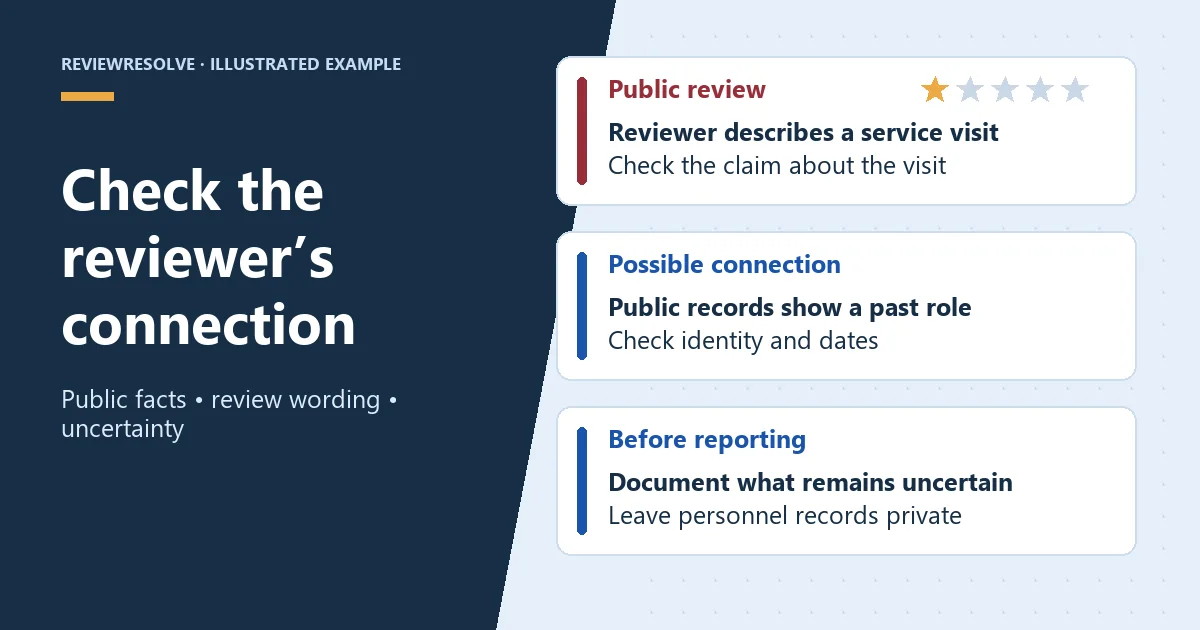
Google lists current or former employment as a possible conflict of interest for Maps reviews. Before reporting, separate two questions. What connects the reviewer to your business, and what does the review actually describe? A first name you recognise or a critical review posted just after someone left is too little to establish that the review came from them.
Start with the claims in the review
Copy the public review link and note the paragraph describing the reviewer’s experience. A complaint about a rota, a shift or a handover may describe employment even if the review appears among customer ratings. A former staff member may also have made a real purchase. If both are possible, record both. Google decides whether the review is based on a conflict.
Ask what a person outside your business could verify. Look for a public self-identification in the review or a dated public source showing the relationship. A shared name, an avatar that looks familiar or a missing name in your sales system leaves several possibilities open.
Match the strength of the evidence to your next step
| What you can point to | What it supports | Useful next step |
|---|---|---|
| The review says the author worked at this branch and describes their own shift handover. | The content itself describes the relationship and the context. | Link to the review and identify the relevant wording in a short note. |
| A dated public staff page supports the claimed role. The review account has a common name. | The former role is corroborated. The account’s identity remains uncertain. | Record the public source and leave identity open. |
| A team member recognises the first name. The review was posted near a departure. | A possible lead to check. Neither fact identifies the author. | Set the case aside until there is independent support. |
| A reliable source supports the connection, but the review describes an ordinary purchase. | Both employment and a customer interaction are plausible. | Record the context and ask whether anything connects the complaint to the former role. |
For an initial enquiry, use public links, relevant dates and a short description. Leave out contracts, payroll records, personal contact details and internal complaints. If someone later requests private records, identify what the information would establish and refer the request to the person responsible for employee data before sharing anything.
Write a report note like this
If a public source covers the role but fails to establish who operates the review account, say so. Remove speculation about motives. If the only clue is the timing, an allegation about a specific former employee adds no verifiable support.
Use the route that matches the current status
For a supported concern, report the review via your Business Profile or Google’s Reviews Management Tool. If a colleague already submitted it, check the existing decision and keep the reference. A reviewed report may offer a one-time appeal. Before using it, check whether you have added a fact that addresses the reason for challenging the review.
Sources
- Google Maps User Contributed Content Policy — rating manipulation and conflicts of interest
- Information Commissioner’s Office — using and sharing employment records
Explains the considerations for sharing workers’ personal information.