
Handle privacy issues or threats · UK owners handling a refund dispute
A reviewer wants a refund and threatens more Google reviews. What should you do?
Decide the refund on the facts of the transaction. Then read the exact message about Google reviews. A customer who says they will leave feedback raises a different issue from someone who links a payment or favour to removing reviews already online. Save the wording before you decide which route applies.
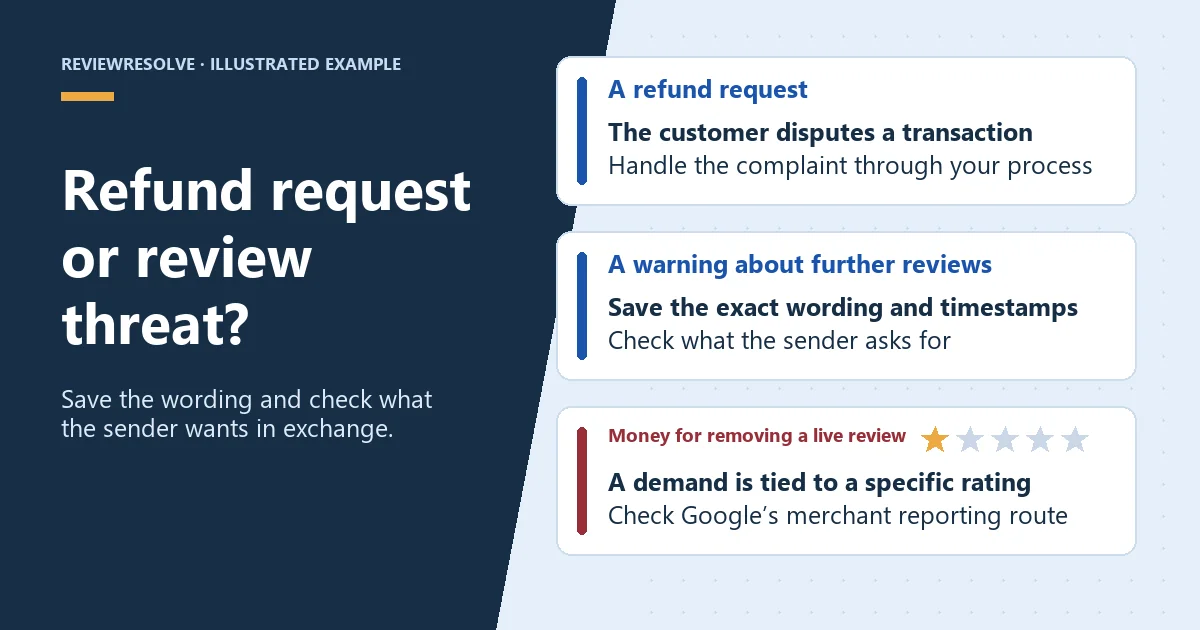
Record what the sender wants and what they say will happen
Keep the original conversation. Write down the amount requested, what the sender says it covers, whether existing reviews are mentioned, and what the sender offers or threatens to do. Record when you received the message. Where a post is already visible, copy its public link and note any detail that connects it to the message. Record a connection as uncertain if the only link is timing.
| What the message says | What it connects | First action |
|---|---|---|
| “Please refund the broken item. I want to leave honest feedback about it.” | A request based on the transaction and an intention to review it. | Deal with the refund through the normal process. |
| “Refund this or my friends will post one-star reviews.” | The requested refund is tied to future posts. No promise to remove an existing review. | Preserve the message and look for evidence about any specific posts that later appear. |
| “Send me £100 and I’ll take down these three reviews.” | A payment in exchange for removal of existing reviews. | Use Google’s merchant extortion route if you suspect an extortion attempt. Save the message and identified review links. |
Google’s merchant extortion route is specifically for businesses directly subjected to a demand for money or favours in exchange for review removal. If you only have a threat to post future reviews, record it and assess any posts that appear against Google’s ordinary policies. An unrelated low rating supplies little evidence of a link. Google makes the moderation decision.
Check Google’s eligibility and evidence guidance for extortion reports
Handle the refund on its own merits
For a genuine customer dispute, have the usual refund or complaints team review the product, purchase terms and applicable consumer rights. Keep any remedy independent of what the customer posts. Google prohibits offering incentives in exchange for posting, revising or removing a review. Avoid offers like ‘we’ll refund you if the review comes down’, even when you believe the review is unfair.
Share the minimum needed for the reporting route
If you suspect a direct extortion attempt involving existing reviews, Google advises preserving the evidence, reporting promptly and avoiding engagement or payment to the suspected sender. Supply the relevant messages privately using Google’s official route. For an ordinary policy concern, record each public review link and what supports the concern. Keep transaction records and private messages in your own case file when asking ReviewResolve about an individual review.