
Gather evidence · UK operators of several locations
One customer reviewed every branch. How should a chain check which Google reviews belong?
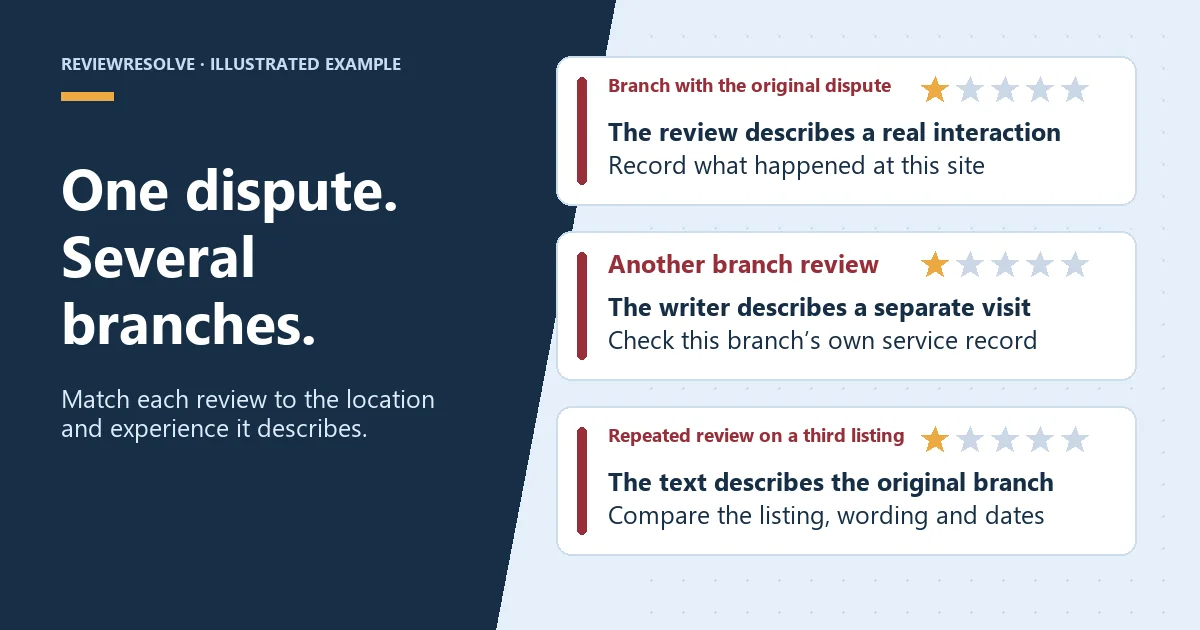
Start with what each review says happened and where it happened. One customer can have genuine interactions with several branches or a shared service team. Focus on posts that repeat the same content or describe an experience at the wrong location, and check the facts before reporting them.
Build a map of the reviews and the customer journey
Record the public link to each branch listing and the direct link to each review. Add the branch the review is posted on, the branch or team named in the text, the service step, and the date as displayed. If the dates are relative, keep a dated capture so colleagues can tell what ‘last week’ meant at the time. Give one person responsibility for keeping the list current.
Use the actual customer journey to check the map. A return might be processed at a different shop from the original purchase, and a central contact team could have handled the complaint on behalf of several branches. Ask each location what it can verify through the usual internal process. Keep order details and private contacts inside that process.
| What the review describes | Check first | What to do next |
|---|---|---|
| A transaction or separate visit at the reviewed branch. | The specific interaction the reviewer describes. | Handle the substance as feedback when the account fits. |
| The same unusual passage at several locations. | The complete text, listed branches and any separate interactions. | Document the repetition and decide whether it supports reporting the identified posts. |
| A service that another branch delivered. | The branch named in the review, the locations shown publicly and any shared services. | Explain the precise mismatch if the available facts support it. |
| A short posting that could refer to a central team. | Which team handled the issue and how the reviewer describes it. | Keep the case open until there is enough information to place the experience. |
Use the location evidence in each individual report
Google requires a genuine experience and says reviews should accurately represent the place or product. It also lists the same content posted repeatedly under its repetitive content policy. Those are different concerns. A review can misidentify a branch without copying text. A repeated passage may be relevant even where the sequence of visits is still unknown.
Keep notes factual, particularly if all posts show the same display name. A matching name can help locate the reviews, but the report should explain the content and the verified branch evidence. Check existing report outcomes separately and use the available Google route for each eligible item.
Make the handover easy to review
Give the incoming manager or assessor a short list of the links, the service step in dispute and what can be verified for each branch. Keep the original complaint open in the business’s own process. If you need help, ask for a review of the items that have an identifiable location or repetition concern rather than treating the entire set as one incident.
Worked study of six reviews after one branch dispute
These six reviews and supporting facts are fictional. Start by assigning case-specific policy review if the available record supports a location mismatch or an identifiable copied passage without corroborating local context. If neither applies and a separate experience at the reviewed branch is described with a supporting record, use feedback process. If the available record cannot establish the connection, use verify first. Apply the rules to the evidence column, then count rows by the resulting route. The numbers illustrate a case allocation decision and do not estimate how often Google will remove a review.
- Feedback process2
- Verify first2
- Policy review2
| Reviewed branch | Claim in the review | Available evidence | Suggested first route |
|---|---|---|---|
| Bristol | The counter refused the return. | The original branch confirms the interaction. | Feedback process |
| Bath | Collection order took 45 minutes. | Bath confirms a distinct collection appointment. | Feedback process |
| Cardiff | Copies the Bristol complaint and names its counter. | Identical unusual wording names a different public branch. | Policy review |
| Exeter | The delivery team failed to ring. | A central dispatch team may have handled it. Route unresolved. | Verify first |
| Swindon | The chain was slow to answer. | The post gives no branch or distinct interaction. | Verify first |
| Taunton | Returns adviser at a Bristol address refused the item. | The stated address identifies Bristol. Public listings show two different shops. | Policy review |
Sources
- Google Maps policy on genuine experiences and repetitive content
See fake engagement and repetitive content for the two concerns assessed separately.
- Google Business Profile reporting and appeal guidance
Explains reporting individual reviews and checking their status.
- Google’s instructions for sharing direct review links